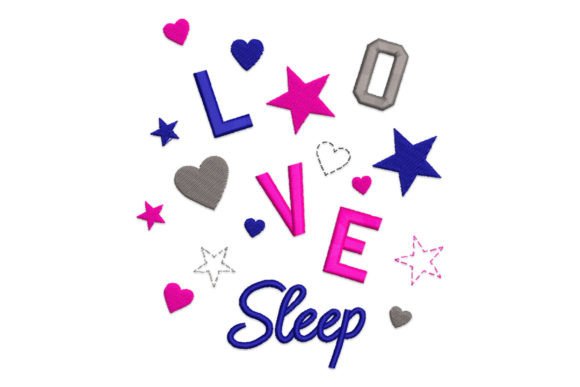
Love Sleep Embroidery Design Review
When I pull a new digital embroidery file into my hoop, I am not just looking at pixels or vector lines. I am visualizing the finished product. I am thinking about how the thread will sit on the fabric, how the customer will hold it, and whether the design holds up after twenty washes. Today, I am evaluating Love Sleep, a machine embroidery design featuring stars and hearts that is marketed toward nursery decor and baby items. As a designer who creates for both personal use and small business clients, I need to know if this file has the substance to stand out in a crowded market of handmade goods.
First Impressions: Mood and Visual Personality
The title Love Sleep immediately sets a specific tone. It is soft, calming, and inherently tied to rest and comfort. Visually, the combination of stars and hearts is a classic motif, but the execution matters more than the concept. In my experience, designs with simple geometric shapes like stars can sometimes look sparse if the stitch density is too low, or they can become muddy if the fill stitch is too aggressive.
From a layout perspective, this design feels balanced. The interplay between the celestial star shapes and the organic curves of the hearts suggests a whimsical yet grounded aesthetic. It does not scream for attention; instead, it invites the viewer in. This makes it an excellent candidate for products where subtlety is key. For a boutique shop owner, this kind of "quiet" design often sells better than loud, chaotic graphics because it fits seamlessly into a curated nursery theme. The visual personality is gentle, making it highly suitable for baby embroidery projects where safety and softness are paramount.
Real-World Application: From Hoop to Hand
Let’s imagine a real scenario. You are preparing a custom order for a client expecting a baby girl. They want a matching set: a onesie, a burp cloth, and a pillow cover for the crib. This is where Love Sleep shines. The versatility of the design allows it to scale well across different mediums without losing its integrity.
On a tote bag design made from sturdy canvas, the stars and hearts would pop with high contrast, especially if you choose a metallic gold thread for the stars against a navy background. However, the true test lies in delicate applications. When embroidered onto a muslin pillow cover or a soft cotton blanket, the design needs to maintain its clarity. If the stitch density is appropriate, the satin edges of the hearts should remain crisp, preventing the fabric from puckering—a common issue in nursery decor items that require frequent washing.
I also see potential here for custom apparel. A sweatshirt embroidery placement on the chest area could feature a single, large heart with smaller stars trailing off, creating a dynamic flow. Alternatively, using this as an embroidered patch for a denim jacket adds a touch of nostalgia. The design’s simplicity ensures it does not date quickly, which is crucial for Etsy seller listings aiming for long-term sales rather than fleeting trends.
Product Value and Brand Consistency
For the craft business owner, the perceived value of a product is directly linked to the quality of the design application. A poorly executed star can look cheap, but a well-stitched one looks artisanal. Love Sleep provides a strong foundation for building brand consistency. If your shop focuses on cozy, home-focused aesthetics, this design aligns perfectly with that identity. It enhances handmade presentation by adding a layer of professionalism. When a buyer sees clean lines and consistent thread colors, they trust the maker. This trust translates to higher conversion rates and positive reviews, which are vital for any small shop product.
Where Caution Is Required
No design is universally perfect, and Love Sleep has specific constraints that every embroiderer must respect. First, consider the hoop size. If the design is scaled down too much for a caps or hat brim, the details may disappear. Small stars can easily merge into a single blob if the resolution is insufficient or if the needle count is too low. Always test the design in your actual production hoop size before committing to a batch.
Fabric choice is equally critical. While this design works beautifully on stable fabrics like cotton, linen, or fleece, it struggles on stretchy fabric or textured fabrics like heavy boucle wool. On stretchy materials, such as some jersey knits used for sweatshirt embroidery, the tension can cause distortion unless a high-quality stabilizer is used. Furthermore, on dark fabric, ensure your thread selection provides enough contrast. A light pastel heart on a black background might get lost, whereas a white or bright silver thread would make the design sing.
Another area of concern is dense stitch areas. If the hearts have thick fill stitches, placing them near seams or curved surfaces like a cap’s front panel can create bulk. This bulk can be uncomfortable for a baby or difficult to sew into a garment later. Avoid placing dense designs on thin fabric where the backing material might show through. Additionally, if you plan to use this for kitchen towel designs, remember that these items undergo harsh washing cycles. Ensure the design is anchored well to prevent fraying over time.
Practical Designer Notes for Execution
Before you upload this file to your machine or sell it as a digital embroidery file, follow these practical steps to ensure success:
- Test on scrap fabric: Never skip this step. Use the exact fabric and stabilizer combination you plan to use for the final product. This reveals issues with tension or puckering early.
- Check thread color contrast: Run a black-and-white mockup of your design. If the stars and hearts blend together in grayscale, they will likely lack definition in color. Adjust your thread colors to ensure distinct separation.
- Review stitch density: Zoom in on the digital preview. Look for gaps in the fill stitch or overly tight clusters. A good balance ensures durability without stiffness.
- Inspect small details: Are the points of the stars sharp? Do the curves of the hearts flow smoothly? If the design relies on tiny running stitch accents, verify they are long enough to survive trimming.
- Confirm licensing: If you intend to sell finished items, check the license terms. Some files are for personal use only. For commercial embroidery projects, ensure you have the right to sell the physical output. Similarly, if you are selling design assets, verify the redistribution rights.
Final Verdict
Love Sleep is a solid, versatile addition to any embroiderer’s library. It captures a timeless mood that resonates with parents, gift-givers, and home decorators. Its strength lies in its adaptability—it can elevate a simple tea towel into a thoughtful holiday gift or transform a plain tote bag into a boutique-ready accessory. However, success depends on technical execution. By respecting fabric limitations, optimizing stitch settings, and choosing the right thread palette, you can turn this design into a best-selling personalized gift. For the creative entrepreneur looking to add a touch of warmth and professionalism to their catalog, Love Sleep is a worthy investment of your time and resources.