Fly Agaric and Snail: A Designer’s Review for Small Business Merch
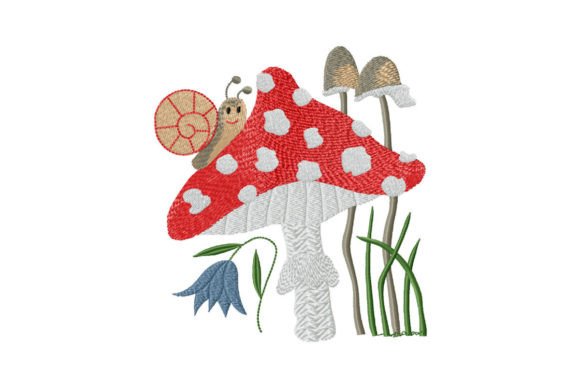
As an experienced embroidery designer, I spend my days evaluating digital files not just for their artistic merit, but for their viability in commercial production. When a client or a fellow maker asks me to review a design for small business merchandise, branded patches, or uniform accents, I look beyond the pretty picture. I look at stitch density, scalability, brand alignment, and durability. Today, I am reviewing a charming design titled Fly Agaric and Snail. Based on the description—a lovely amanita mushroom with a baby snail, joined by a bluebell and twin grebes—this piece promises a whimsical forest fairy tale aesthetic. But does it hold up as a serious asset for small business merch, custom apparel, and branded product labels? Let us dive into the practical realities of using this embroidery file in your business.
First Impressions: Visual Personality and Brand Fit
The immediate impression of Fly Agaric and Snail is one of playful elegance. The combination of the iconic red-and-white Fly Agaric mushroom with the gentle presence of a snail creates a narrative that is both rustic and premium. This is not merely decorative; it tells a story. For brands in the bakery, florist, pet care, or handmade goods sectors, this visual personality can be incredibly powerful. It feels friendly, approachable, and distinctly handmade product oriented.
However, the inclusion of additional elements like the bluebell and twin grebes adds complexity. From a design standpoint, this suggests a busy composition. While visually rich, we must consider whether this level of detail translates well when reduced to the size of a chest logo or a small patch. The aesthetic leans towards classic and modern-folk, which pairs exceptionally well with eco-friendly branding, organic cafes, and boutique retail environments. It evokes a sense of nature and tranquility, which can significantly enhance brand identity if your target audience values sustainability and artisanal quality.
Real-World Application: Where This Design Shines
In the realm of commercial embroidery, versatility is key. Here is how Fly Agaric and Snail performs across various common business applications:
- Embroidered Patches: This design has strong potential for iron-on or sew-on patches. The central focus on the mushroom and snail provides a clear focal point. These patches can serve as unique customer gifts, loyalty program rewards, or distinctive branding on tote bags and denim jackets.
- Apron Embroidery: For bakeries, florists, or craft studios, this design works beautifully on aprons. The whimsical nature of the forest theme softens the professional look of workwear, making staff appear approachable and creative. It adds a touch of personality to custom apparel without being overly distracting.
- Cap Embroidery: If the design is simplified effectively, it can work on the front panel of caps. However, the "twin grebes" and flowers might clutter a standard 3.5-inch hoop area. It is best suited for larger cap fronts where the details can breathe.
- Tote Bag Design: Canvas totes are a staple for Etsy sellers and market vendors. This design, with its earthy tones and natural subjects, complements the texture of canvas perfectly. It reinforces a handmade product vibe and encourages customers to carry your brand visibly.
- Product Packaging Accents: Small versions of this motif can be embroidered onto fabric tags attached to packaging. This elevates the unboxing experience, signaling attention to detail and quality to the end consumer.
Critical Considerations: Where to Use Caution
While the charm of Fly Agaric and Snail is undeniable, there are specific scenarios where this design requires careful handling. As a designer, I advise clients to avoid placing complex designs in areas prone to distortion or excessive wear.
First, consider stitch density. If the original file has high-density stitching for the mushroom spots and the fine lines of the snail shell, it may become stiff or puckered on lightweight fabrics. Always test on the actual fabric type before committing to bulk production. Second, be wary of small patch sizes. If you intend to use this as a tiny accent (under 2 inches), the details of the bluebell and grebes may disappear, leaving only a muddy blob of color. In such cases, simplifying the design is crucial.
Furthermore, dark uniforms require contrasting thread colors. If the background fabric is dark, ensure the white highlights on the mushroom and the light blues of the flowers have sufficient contrast to remain visible. Textured fabrics, such as heavy wool or nubby linen, can obscure fine stitches, so a smooth cotton twill or polyester blend is preferable for maintaining clarity.
Impact on Brand Identity and Customer Trust
Using a cohesive and aesthetically pleasing design like Fly Agaric and Snail directly influences customer trust and recognition. When a brand consistently uses high-quality embroidery on its merchandise, it signals professionalism and investment in the customer experience. A well-executed embroidered patch feels permanent and valuable, unlike printed graphics that may crack or fade.
This design fosters visual consistency for brands that want to project a warm, nature-inspired image. It helps in buyer engagement because people connect with stories. The interaction between the mushroom and the snail invites curiosity. When customers see this on a tote bag or apron, they are more likely to ask about it, creating a conversation starter that strengthens the connection between the buyer and the brand.
Practical Designer Notes for Production
Before you upload this digital embroidery file to your machine for production, follow these essential steps to ensure a successful outcome:
- Test in Black and White: Convert the design to monochrome to check the balance of positive and negative space. Does the composition feel balanced without relying on color?
- Check Scalability: Create a printable mockup of the design at the intended final size. Look closely at the spacing between elements. Are the gaps too narrow for the needle to pass through cleanly?
- Review Thread Color Contrast: Ensure the chosen thread colors pop against your specific fabric. The red of the amanita should be vibrant, not dull.
- Confirm Hoop Size: Verify that the design fits comfortably within your standard hoop dimensions, allowing enough margin for hooping stability.
- Use Proper Stabilizer: For delicate fabrics, a cut-away stabilizer is recommended to prevent distortion during the embroidery process.
- Inspect Stitch Direction: Look at the stitch flow. Does it move logically across the shapes? Poor stitch direction can lead to thread breaks or unsightly gaps.
- Verify Commercial Licensing: Most importantly, confirm that you have the right to use this design for commercial embroidery projects. Do not assume personal use licenses cover merchandise sales.
In conclusion, Fly Agaric and Snail is a versatile and engaging design asset for small businesses looking to add a touch of whimsy and professionalism to their merchandise. By paying attention to technical details like stitch density, fabric choice, and licensing, you can transform this charming forest scene into a powerful tool for brand building. Whether used on aprons, caps, or patches, it offers a delightful way to showcase your brand’s personality while delivering a tangible sense of quality to your customers.